
Full Circle
FILMING STONE, TIME, & DEMOCRACY
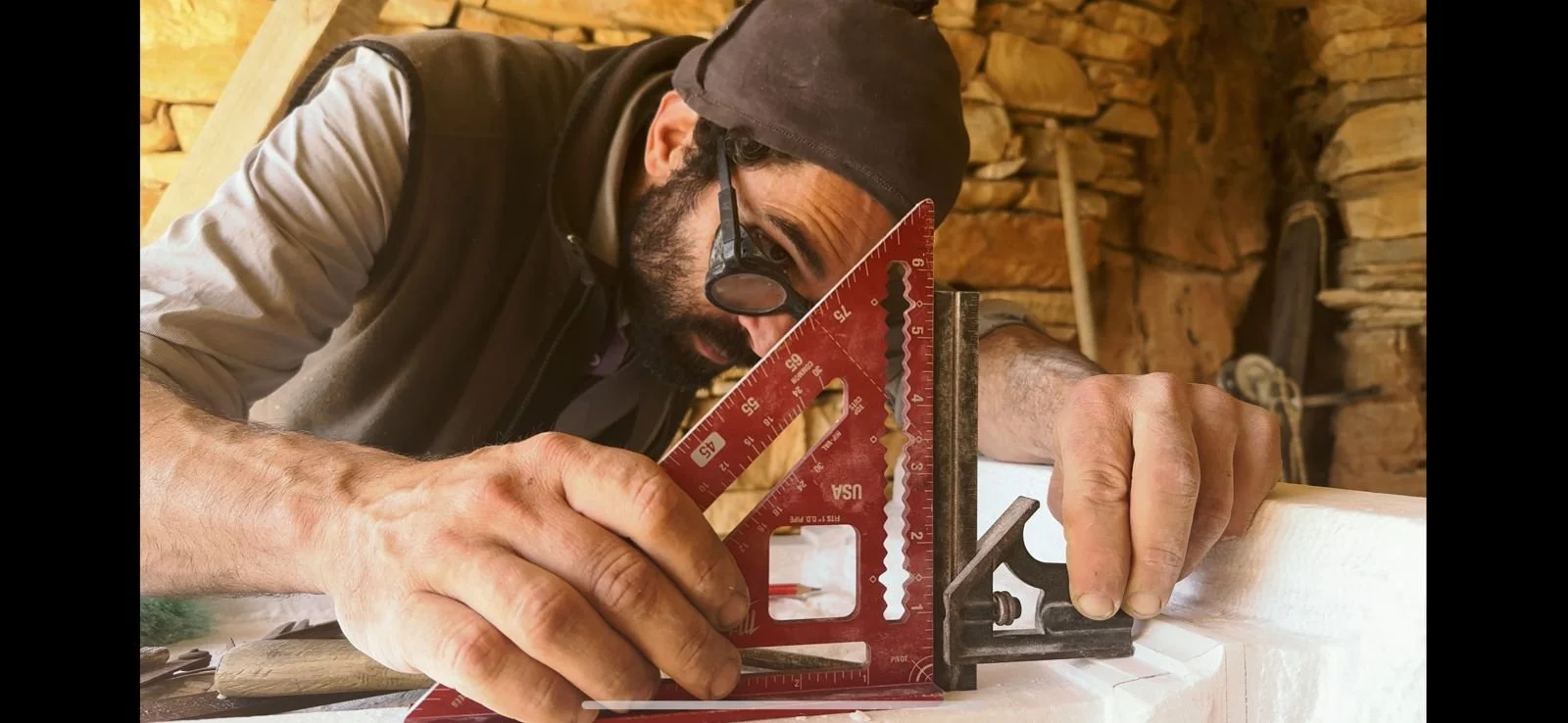
As life would have it, my old university studies in documentary filmmaking quietly circled back around to me after many years away.
A friend on Tinos—and talented marble worker—was invited to take part in a documentary co-produced by YuZu Productions in Paris. The project followed Panagiotis over the course of nine months as he carved an authentic replica of an ancient Athenian object known as the Kleroterion.
What’s A Kleroterion?
The kleroterion is not just an artifact—it’s a physical expression of the first experimental phases of democracy itself.
In ancient Athens, it was used as a randomization device to select citizens for public office and jury duty. Names were inscribed on small bronze or wooden tokens and inserted into vertical slots carved into the stone slab.
A system of black and white dice, released row by row, ensured that selection was left to chance rather than wealth, power, or persuasion.
It was an early—and radical—tool for civic fairness, designed to prevent corruption and concentrate authority in the collective rather than the elite.
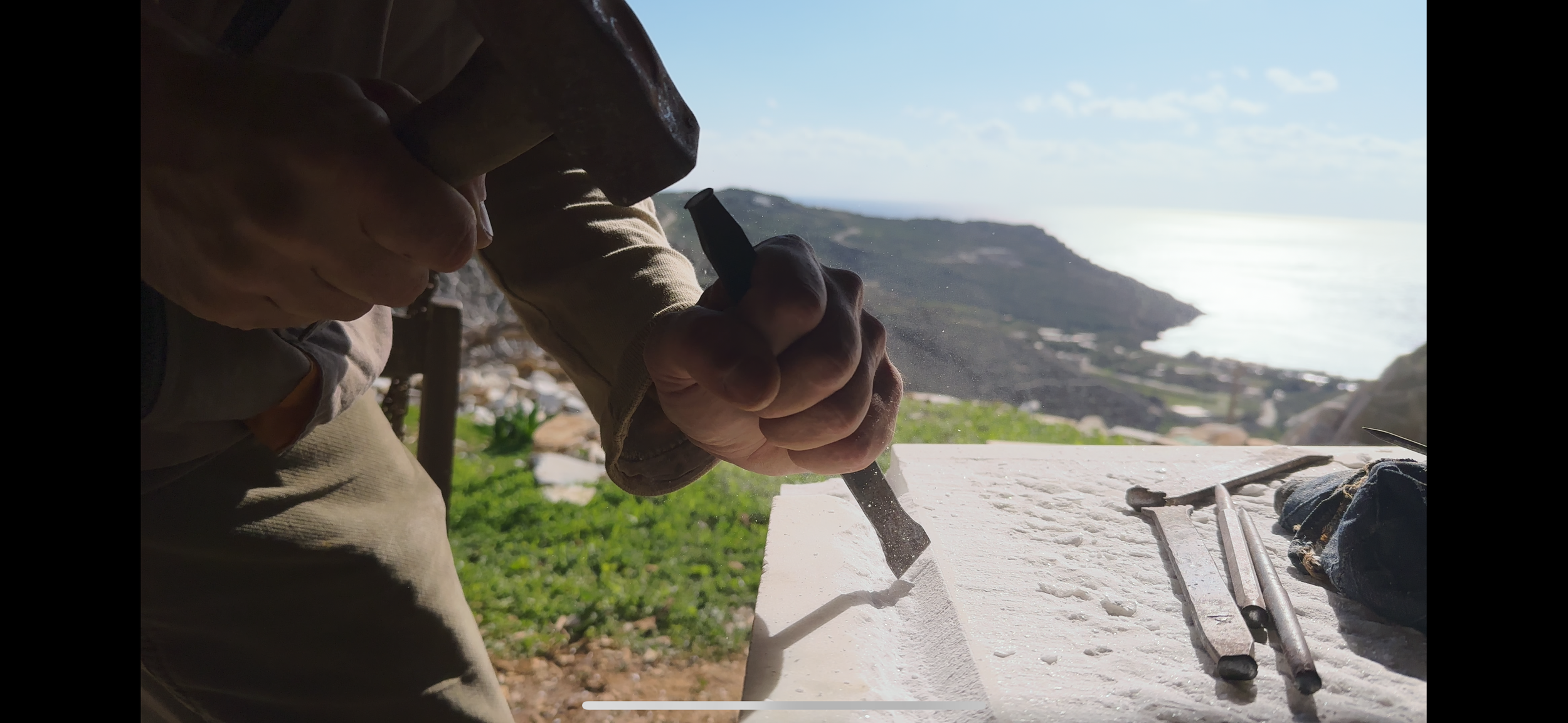
This wasn’t the first reproduction of a kleroterion. But it was the first time one was recreated using the original ancient craft methods—no CNC machines, no 3D modeling, no mechanical shortcuts. Just hand tools, time, masterful skill, and an intimate dialogue with stone.
By taking no modern short-cuts, archaeologists are hoping to glean new information about the tools, technical skills, and behind-the-scenes story of this iconic object.
Yet the challenge with filming this process was logistical. It was too costly and inefficient for a film crew to travel constantly from Athens or elsewhere. So I was invited to step in as the local, on-site filmmaker—new iPhone in hand—to quietly and consistently document the carving process from beginning to end.
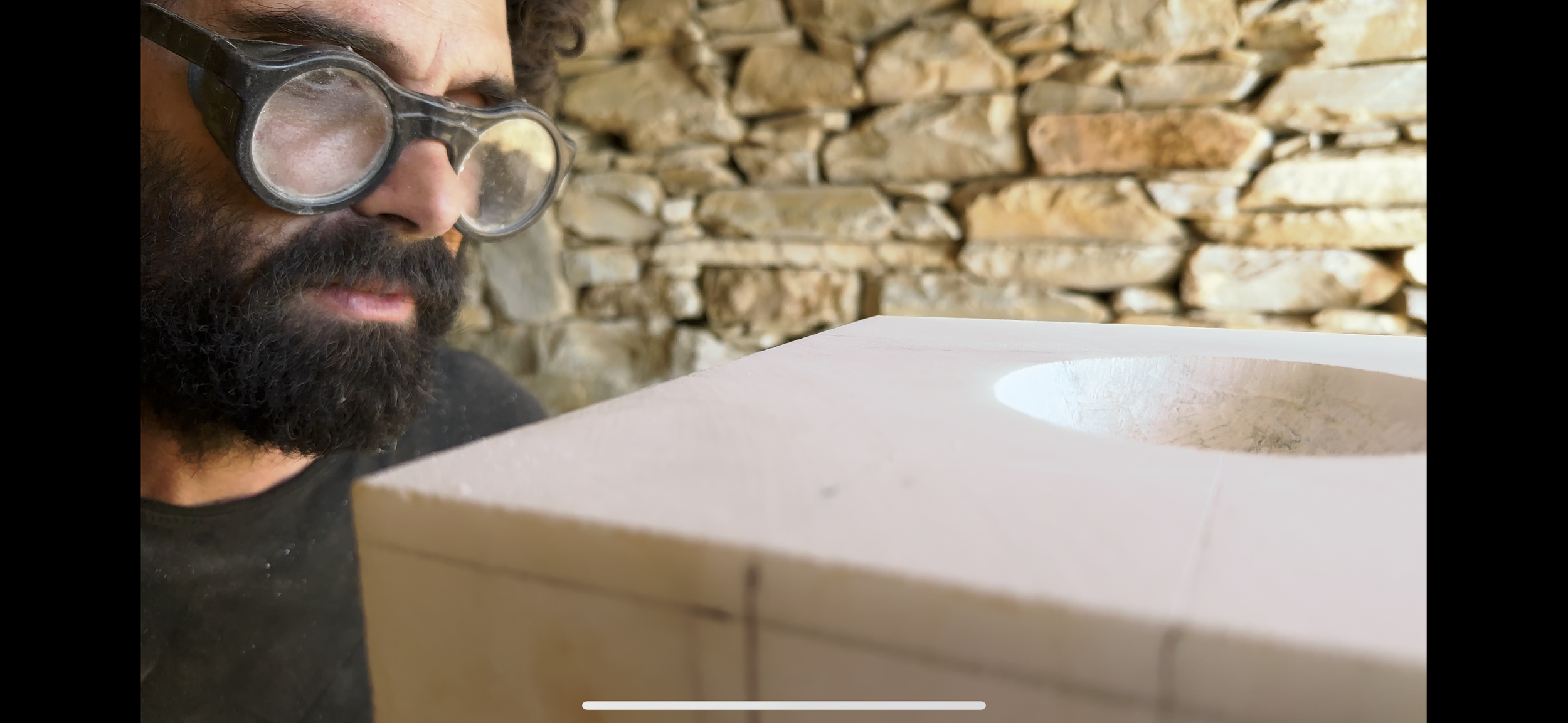
What I witnessed over those months was slow, meditative, meticulous work. Marble is not forgiving. Each strike matters. Through observation alone, my eye began to learn the visceral clues—how veins run through the stone, how tension builds, how you can almost feel when a piece is about to chip away before it happens. I’ve never worked marble myself, but standing close to that process quickly demanded my respect.
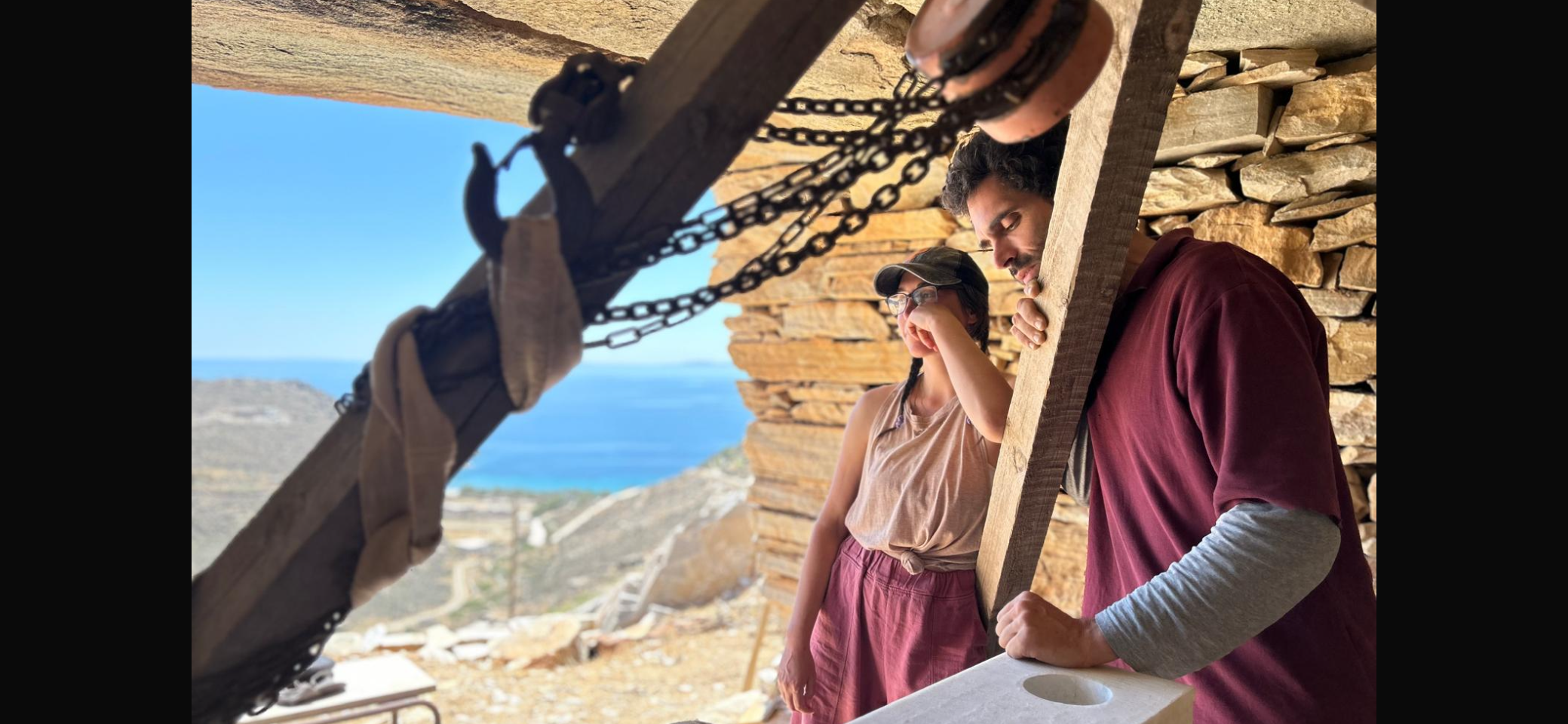
In many ways, filming this felt less like “shooting a documentary” and more like bearing witness to a friend’s craft, to a piece of history I knew nothing about, and ultimately to the meeting point of ancient civic ideals and living modern hands that can, maybe, still hold them.
The film is currently in post-production and is slated for release in Greece, France, and Canada within the next year. We’ll be sure to keep you posted as it makes its way into the world—and who knows, perhaps we’ll even have the chance to screen it at HOMA one day.
Sometimes paths don’t disappear; they just wait quietly until the right moment to reappear.
The Greek Legacy of Marble
Ancient Greek marble craftsmanship was grounded in patience, precision, and an intimate understanding of stone.
Sculptors worked entirely by hand using iron and bronze tools—point chisels for rough shaping, tooth and flat chisels for refinement, wooden mallets, bow drills, and abrasives made from sand or emery.
Each strike followed the marble’s natural grain; learning to “read” the stone was essential to avoid cracks and breaks.
The most prized marbles came from specific regions, each with unique qualities. Pentelic marble, used in the Parthenon, is fine-grained with a subtle golden hue, (and also sourced for this project) while Parian marble was famed for its translucency, giving sculptures a lifelike softness.
Many works we now see as white were originally painted in vivid colors, reminding us that Greek marble art was never meant to be austere.
Its enduring power lies not just in the stone itself, but in the extraordinary attentiveness and skill with which human hands brought it to life.
