
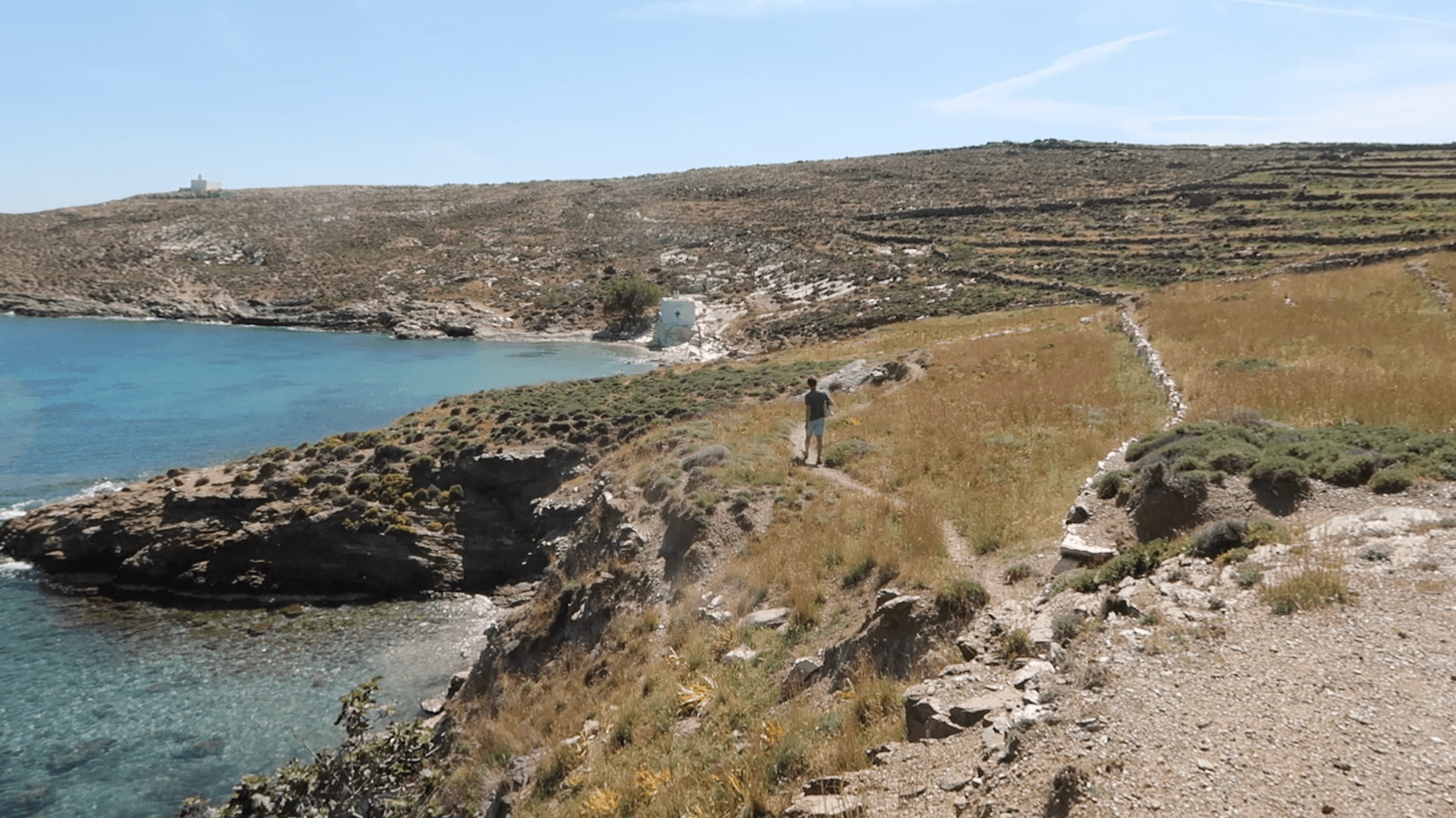
We first discovered Tinos in June of 2016, a bit by happenstance and a bit by fate. By that point, we had spent years traveling throughout Greece, searching not for the most beautiful place—but for the right one. A place where we could put down roots, offer something of ourselves, and grow in return.
That journey had brought us to Syros. Ermoupolis, with its neoclassical elegance and vibrant life, is undeniably lovely. And yet, as had happened in all the places before it, we knew Syros was not our home.
Beauty alone, we had come to understand, cannot sustain the decision to stay.
Greece is full of breathtaking corners and islands, but choosing a place to live asks for a deeper relationship—one that feels alive and reciprocal, as real as any relationship between people.
It was while we were in Syros that something curious happened. In three separate, entirely unconnected conversations, three different strangers told us the same thing: You should visit Tinos.
The third encounter sealed it. A woman was walking her dog alone up in the mountains. There was no real reason for us to stop the car—but we did. We said hello. We talked. She told us she was a teacher in Syros and loved her life there, but that the island across the water, Tinos, was the land that truly spoke to her. When we shared what we were searching for, she didn’t hesitate. She pointed across the Aegean Sea, right in front of us.
“That’s the place you’re looking for,” she said. “That’s where you have to go.”
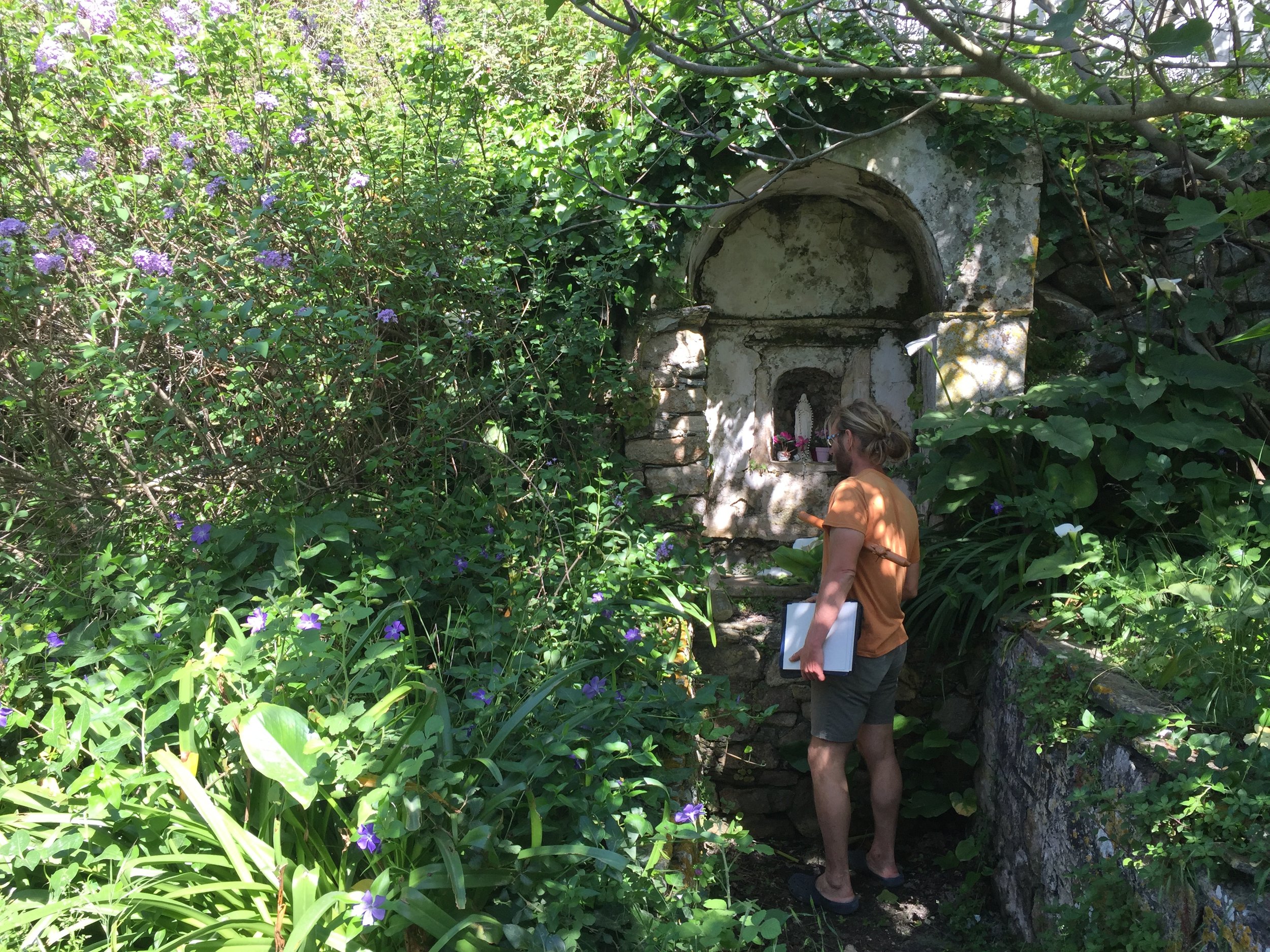
The energy of Mother Mary is palpable throughout many quiet corners of Tinos
Part of us thought she was a little crazy. But there was something in her voice—clear, grounded, authoritative—that made us listen. So we decided to go.
What makes this even stranger is that, in more than seven years of searching together, we had never once considered Tinos. Not even briefly. Like many Greeks at the time, we carried the impression that Tinos was primarily a religious island, known almost exclusively for its church and not much else.
That reputation comes from the story of the Church of Panagia Evangelistria, which has defined Tinos for nearly two centuries. In 1823, following a series of visions experienced by a nun named Pelagia, a miraculous icon of the Virgin Mary was unearthed. The discovery coincided with the Greek War of Independence and quickly became a powerful national and spiritual symbol. The church built to house the icon became one of the most important pilgrimage sites in Greece, drawing thousands of faithful each year—especially on August 15th, the Feast of the Dormition of the Virgin Mary.
In a way, that singular identity was a blessing in disguise.
It preserved the island for decades, sparing it from the aggressive overdevelopment and mass tourism that rapidly degraded so many other Greek islands. (Unfortunately, overdevelopment is now one of the greatest threats Tinos faces today.)
So when we finally arrived on Tinos a few evenings later, we thought we’d stay for two days—just long enough to “check it off the list” before continuing on.
Instead, we were swept up in a quiet, magical series of tiny miracles and encounters our first night. Conversations with car mechanics fixing our flat van tire at 11PM. The quiet lapping of the sea. The stars and warm breeze. The tamarisk trees swaying. Feelings that were impossible to explain but equally impossible to ignore. We had hardly seen anything, but still the knowing was growing.
By the next morning, we knew—without doubt—that we had found our place.
Ten years later, we are still here.
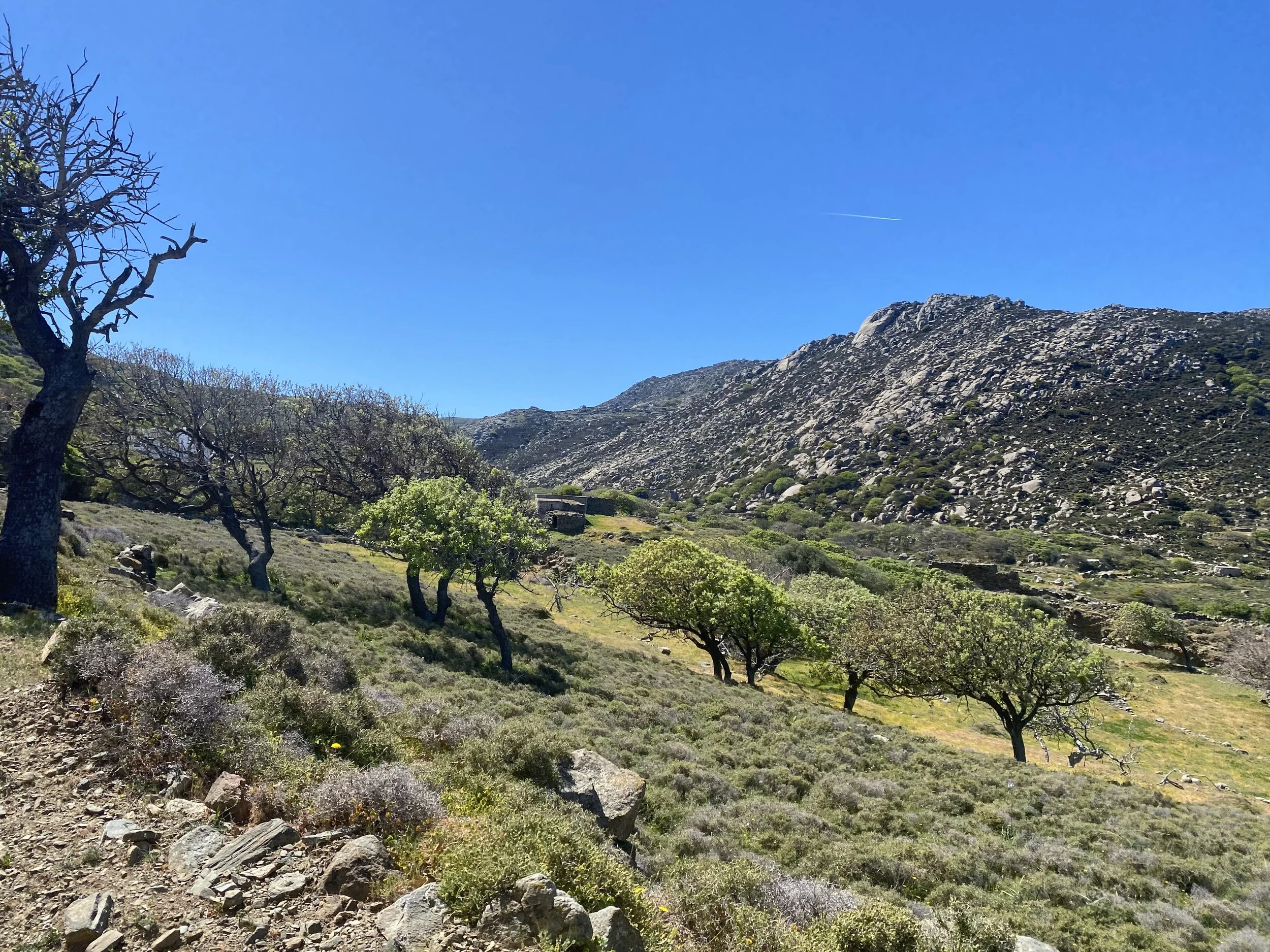
The wilder region of Livada has one of the loveliest hiking trails of the island
Our roots continue to grow deeper in this mystical land. Tinos has healed us and challenged us in equal measure. It has asked more of us than we expected and given back more than we could have imagined. And we feel profoundly grateful to witness this moment in the island’s unfolding story—a chapter of renewal and innovation, of new community taking shape, alongside an ancient and enduring celebration of the land’s own identity and spirit.
Tinos didn’t just become our home. It became a central relationship in our lives—one we continue to tend, listen to, and grow with every day.
